I certainly wasn’t expecting a story about life and death as my first review after recent events in the family.
For the past few weeks, I had been grieving, along with the rest of the family, for the loss of our mother and one of our siblings whom we both lost only two weeks apart. So it was a bit of a surprise and a pinch that Mamoru Hosoda’s latest project felt to me more about a rumination on life and death rather than a tale of revenge and forgiveness as was the film’s Shakesperean inspiration, Hamlet.
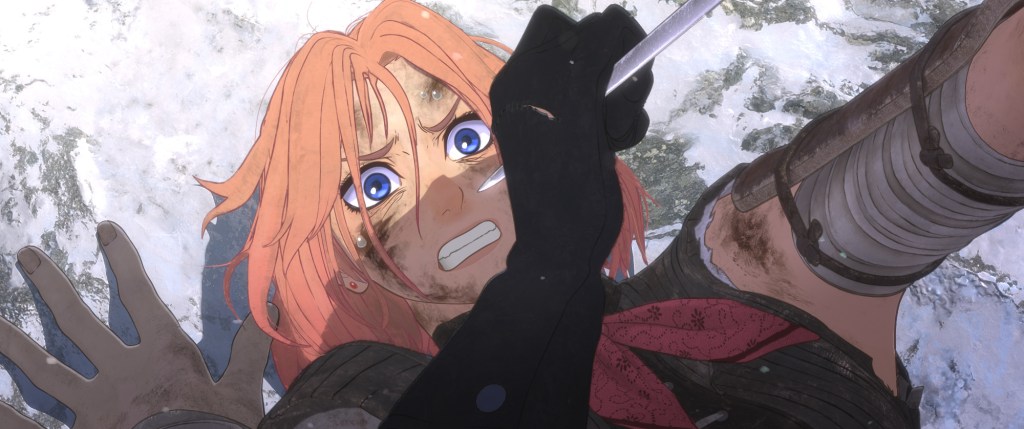
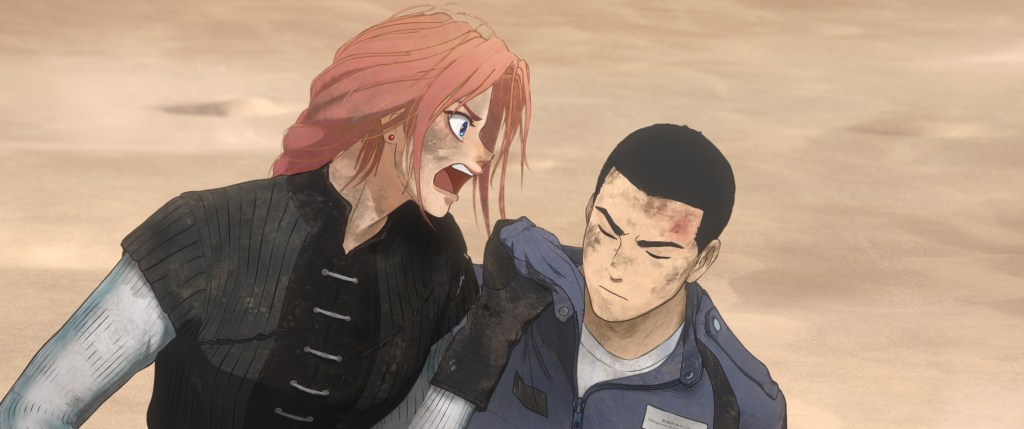
The film begins in the Otherworld – that space between life and death that is also beyond time – as a grown Scarlet (VA Mana Ashida) struggles to break free from the grasp of a hundred hands of death, vowing to exact revenge for her slain father, whether she does it alive or in the afterlife.
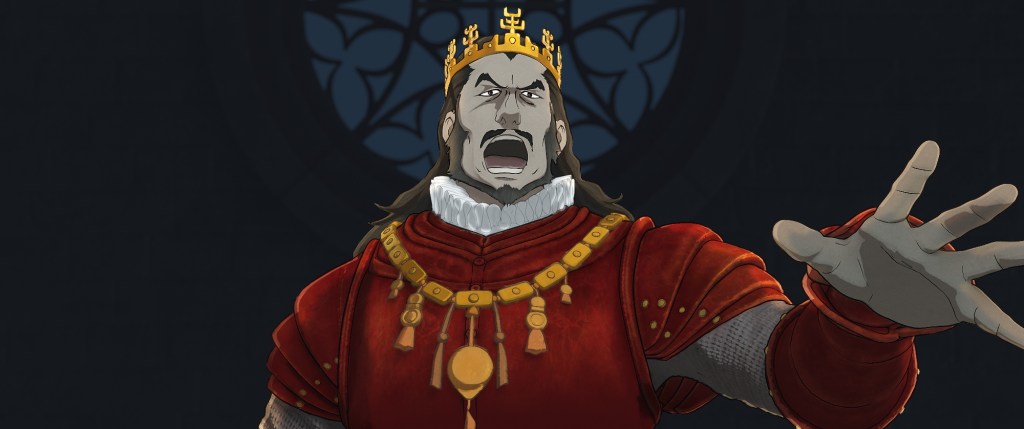
Rewind back to medieval Denmark where this tale begins, where beloved king Amlet (VA Masachika Ichimura) is killed by henchmen after a coup by his own brother, Claudius (VO Koji Yakusho) and the queen (VA Yuki Saito), who were having an affair. Scarlet, the only royal child, is spared (for whatever reason) – but the young princess promises herself to avenge her father.
After some years of combat training, she makes an attempt to slay her father’s murderer at a banquet. Her naivete getting the best of her, Claudius points out, as Scarlet falls from a poisoned drink. Which brings us to the beginning of the film.
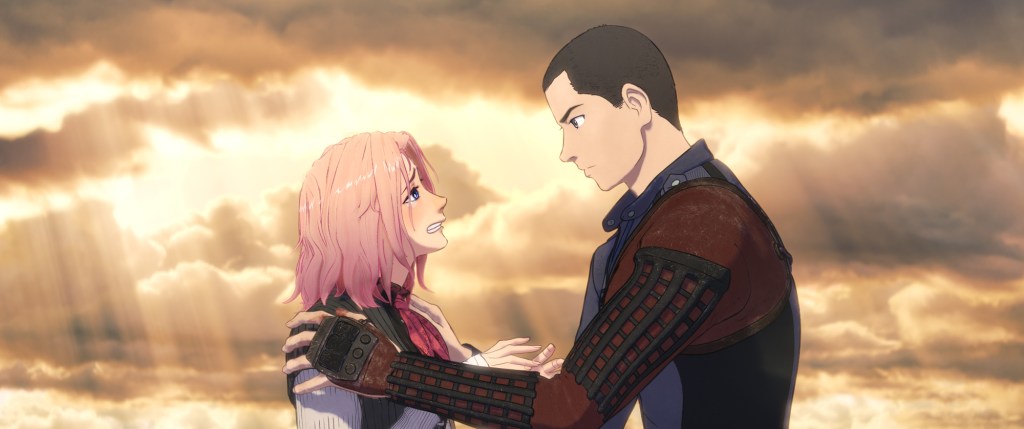
Scarlet breaks free the hellish hands grasping at her, and begins to search for a way to go back to her kingdom – only to be told by other souls that her uncle, too, has died, but is building his own kingdom in the Otherworld. She ventures off to find Cladius’s otherworldiy stronghold, occasionally fighting off his soldiers one by one. Quite soon along the way, she meets a curious young man who introduces himself as a paramedic. Hijiri (VA Masaki Okada) doesn’t believe he is dead since his purpose is to heal the wounded. They make an odd couple crossing vast distances together, often disagreeing that their pursuits to peace were completely opposite from each other. One believes that revenge will grant her soul peace, the other believes that acceptance of others grants peace.
One night as they camp out together with a diverse collective of travelers, Scarlet sees a vision of an alternate life of happiness set in Hijiri’s time. When she wakes from this vision, she asks Hijiri if she could have lived differently (from a life built on revenge) had she been born at a different time. This line hit me, as it reminded me of my brother’s unfinished life that was cut too soon. I wondered if he could have lived a fulfilled life had he been born at a different time and place, a better one than what he was given in this universe.
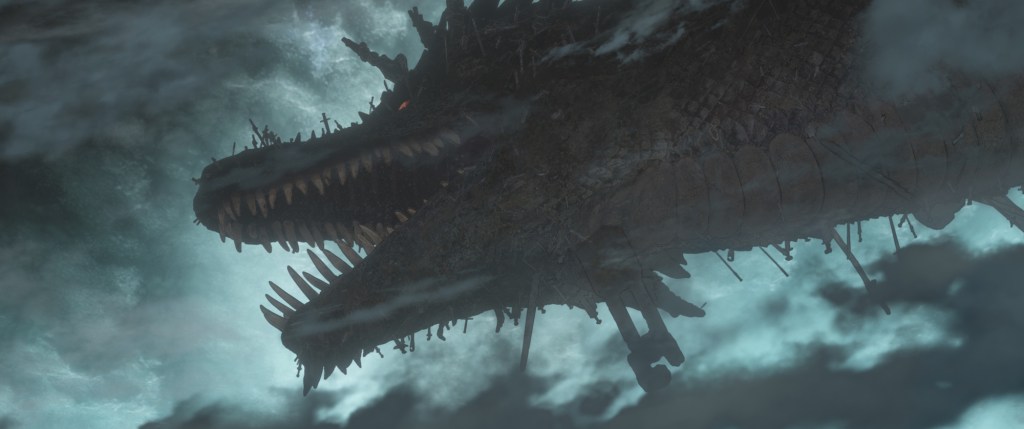
When Scarlet and Hijiri do reach Claudius’ stronghold, it’s a mad dash towards the gates of paradise along with hundreds of thousands of other souls gathered at the foot of Claudius’s castle. The narrative takes a chaotic spin from this point onwards. Scarlet meets Claudius at the gates to paradise, and the two spar with sharpened voices – conscience versus purpose, anger versus understanding, revenge versus destiny. Ultimately, the roar of the draconian universe metes its thunderous justice after Scarlet disowns the hatred inside her. This film preaches peace at a time (whether in Scarlet’s or ours) when uncertainty and disasters spell war and suffering, and forgiveness as the path towards enlightenment.
I have a disagreement with this worldview. I dare not say that this path has no merit, but in today’s time when tyranny and fascism are spreading across the world, seeking accountability is the just way for peace, There can’t be forgiveness without acknowledgment and repentance.
Denmark, Amlet, Gertrude, Claudius, “frailty, thy name is woman” – quick-eared fans and students of the Bard can easily recognize the reference to Shakespeare’s Hamlet – although the source material hits harder with darker scenarios of revenge, conspiracy, insanity, and death.
Hosoda takes a different path for his version of Hamlet – one that involves a journey through the underworld as a path towards salvation (or resurrection. Hosoda often merges various themes in his adaptations, either to sublimate or alter the text of the source, as in the case of his most recent before Scarlet, Belle (2021.)
Belle was a loose musical adaptation of Beauty and The Beast – replete with a version of the infamous 3D ballroom dance that wowed audiences of the Disney animation and a public storming of the castle led by a misguided, haughty soldier not too different from the Disney Gaston. But Hosoda’s tale provoked questions on identity and truth at a time of digital (artificial) personas. His Belle was the story of a young student who could only find acceptance as a beautiful singing avatar in a digital universe – not so different from the virtual worlds that we today populate. As a side story, Belle even took a shallow dip into the world of child abuse and parental overreach – hot topics even in today’s still-patriarchal Japan.
Scarlet, by journeying through the underworld, questions life and death with religious undertones. Can we truly rework our karma if reincarnation is granted? As this question crossed my mind, I wondered if my mother’s and brother’s souls would be granted new, more fulfilled lives than what they had gone through, no matter how much love our family (thinks) had showered their way, considering all circumstances.
It’s not an accident that Hosoda presents a diverse population of cultures in this version of purgatory, even including a musical number involving Pacific islanders (not sure if Hawaiian.) Hosoda wants to ask (naively, to me at least) a universal question: is the pursuit of peace (internal or wartime) attainable through forgiveness? It sounds like a Bhuddist question, even though forgiveness is central in Christian belief. Not a surprise, again, as the name Hijiri – that person in the story that constantly tames Scarlet’s anger – simultaneously translates from Japanese to healer, a holy man, (and the symbol) to the Christian Bible. Minus this exploration, Scarlet’s revenge plot comes off as a thin storyline.
From an animation perspective, Hosoda has mastered the merging of 2D hand drawn images with the 3D movements of CGI, something he has been doing since his most famous piece, The Girl Who Leapt Through TIme (Toki o kakeru shôjo) in 2006. Artwork and lighting swing from painterly lush to stunningly realist, but the magic is when the camera moves to add dimension to these images. Two sequences are particularly impressive: an action-packed sword fight while mounted on horses, and that tropical paradise of thick jungle leading to the heavenly gate. The fight scene impressed in how the camerawork made the hand-drawn elements move in a virtual 3D environment, the jungle impressed by sheer photorealism.
As a side note, Hosoda often gives his characters wide-eyed, open-mouthed, jaw-dropped expressions multiple times in one movie. Scarlet and Hijiri did this a couple of times; Makoto (in The Girl Who Leapt Through Time) did, Suzu and several side characters did this in Belle; Hana did this a lot in Wolf Children (2012.) Maybe this is Hosoda’s way to indicate how the world is often full of surprise. Or maybe the expression just happens to occur very often, as his stories always include a twist or two.
Another curiosity: in a sea of character realism, Scarlet’s head and face is designed to subscribe to anime conventions: that is, her face is shaped like that of a cat. The rest of the charaters in the film have a realist shape to them (the only other possible exceptions are the faces of the random girl and the Mystrious Old Woman narrator.) Not fond of the musical scoring, as I find (personally) Hosoda’s films just a tad too overscored. Maybe it’s just a sound mixing thing.
Stunning visuals, deep story from Mamoru Hosoda. But the revenge story may be too dark for most audiences (but shouldn’t be a problem with regular anime fans.)
Scarlet is showing exclusively in SM Cinemas now from Columbia Pictures Philippines.
Sorry, Jlo. This is not your ticket to the Oscars.
The latest version of the acclaimed novel Kiss of the Spider Woman would sit well as a streaming weekend special at home. It’s not big enough to warrant a premium screen, but good enough for the couch. No Oscars for this musical, either.
Director Bill Condon (Chicago, Dreamgirls, Gods and Monsters) teamed up with acclaimed writer Terrence McNally (RIP+) to adapt the award-winning 1976 novel by Argentine playwright Manuel Puig and the 1990s West End and Broadway stage musical (John Kander music, Fred Ebb lyrics) to the big screen. The result is… okay.
The stage is small and the screen is small in Condon’s adaptation of the story of two prisoners in 1970s Argentina who form a bond through fantasies of Hollywood musicals. (The 1985 film is set in Brazil.)
SLIGHT SPOILERS AHEAD for those unfamiliar with the stage musical, the novel source material, and/or the 1985 dramatic film directed by Hector Babenco.
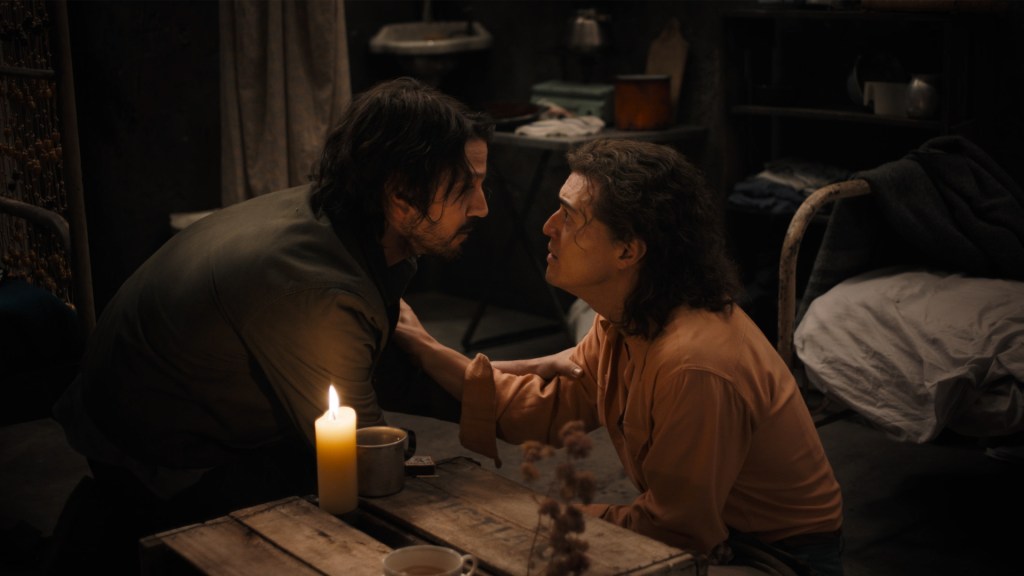
Luis Molina (Tonatiuh), a gay window dresser convicted of public indecency, is thrown into the prison cell occupied by political activist Valentin Arregui (Diego Luna).
At first, Valentin is curious about Molina’s incarceration, but finds the chatty Molina interruptive of his daily scholarly routine. There is a short discussion about the fascism that has engulfed the country, juxtaposing political struggles against Valentin’s gender struggles. Yes, the source material is political.
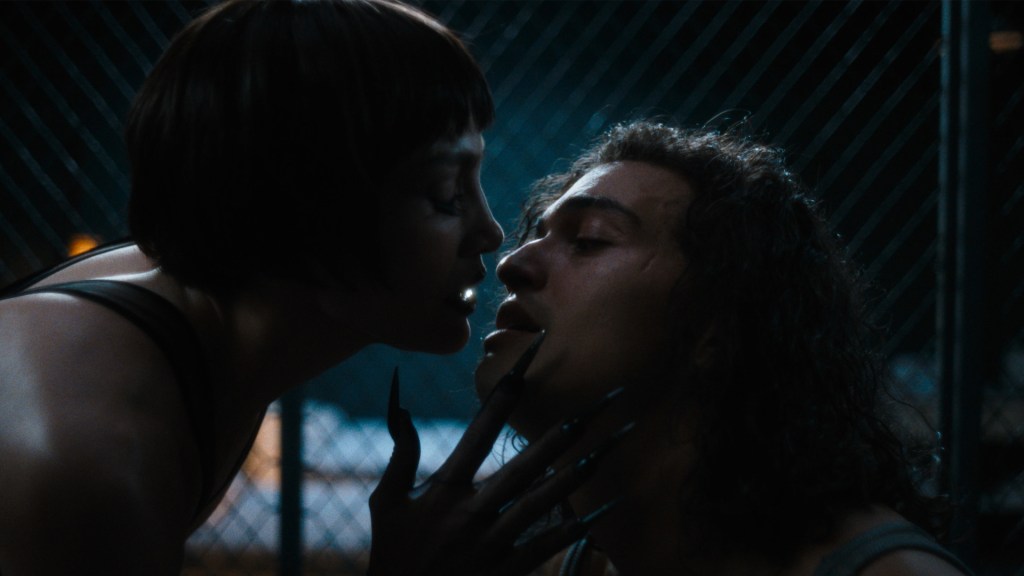
To escape prison hardships, Molina tells Valentin, he surrenders to fantasy and relives the movies of his favorite film star, Aurora (Jennifer Lopez), in particular, Kiss of the Spider Woman, where Aurora plays the lead role as well as the titular vampiric main villain, whose cursed kiss brings death to the characters of that movie. The Marxist Valentin couldn’t relate to this fantasy and even suggests that Molina should reclaim his manhood. A truce is temporarily declared, and the two spend the night silently in their beds.
The next day, and in the course of several days, Valentin is taken from his cell and tortured by the prison guards for information on the rebels. At this point, I am reminded of Luna’s more significant and recent project as another rebel from far, far away, so I wonder if Luna was typecast for Spider Woman. Each time Valentin is returned to the cell, Molina tends to his wounds and helps him recover. In those instances, Molina, at the request of Valentin, would continue the tale of Aurora and her battle to defeat the Spider Woman. Eventually, Valentin welcomes the stories as the prison abuse gets worse by the day. Molina would gladly oblige, in part to drown out the screams from prisoners in other cells, in part because he has seen Valentin suffer for his beliefs, not too different from his own struggles. Thus, a bond is established between the two, based on the tale of this superstar and her poisonous twin.
In truth, however, Molina was planted by the prison warden to spy on Valentin, on the promise of immediate parole so Molina could return to his sick mother. Valentin never finds out about this, except on Molina’s parole day, when the warden suddenly decides to free Molina. Believing that the two have grown close enough for Valentin to plant information to Molina, the warden signs off on Molina’s parole but puts a watch on him. Before Molina could leave Valentin, he finishes Aurora’s tale, and the two consummate their found affection. Unfortunately, it’s not a happy ending for Molina.
Over the course of this review, you may have noticed that the summary revolved around Valentin and Molina, and hardly any mention of Aurora or the Spider Woman. In fact, the story does revolve around Molina even more than Valentin. Which is to say, Aurora, as a device, served to propel Molina’s and Valentin’s developing bond with each other, as well as the device that visualized Molina’s emotional journey.
In other words, Lopez, no matter how good her singing and dancing were, was playing a fictional character in a movie musical within a movie, and her portrayals of both the diva actress and the spider woman were limited to mimicking how the actors acted onscreen during that era of Hollywood musicals. Was it good? Yes. Was it great? No. By default, the actual story was not Aurora in her fictional world, but Molina in his prison cell. With some luck, this film could snag a support nomination for JLo in the Globes, under Comedy/Musical. The Oscars don’t have that category, and Aurora isn’t compelling enough to stand out.
Similarly, Condon’s stagey adaptation of the prison, the prison cell, and the fictional world of Aurora are too small for today’s 4K audience. Except for the few exteriors of the prison yard and of downtown Buenos Aires, most everything looked flat. felt small or sounded as if the songs were one note shy of being a showstopper. Big or small, there were no wow scenes, no Cell Block Tango from Chicago, or no emotional highlight like the Waltz for Evita and Che (there were attempts, though, towards Spider Woman’s end, but clearly far from the calibre of those two other musicals.)
In hindsight, casting Spider Woman was already handicapped with a star such as Jennifer Lopez on board. Could not cast a lead actor bigger in the marquee than JLo, yet required enough gravitas for the role that won William Hurt (RIP) an Oscar in 1986. Tonatiuh gave this his all, but somehow, those imaginary scenes with Aurora may have influenced face acting occasionally displayed throughout the film. Luna may have been cast for awards legitimacy, but like I said, this is Molina’s story. But really, Andor, again?
There is one musical number that I think soared. It is when the Spider Woman visits Molina in his dream and tempts him to take the kiss to end his suffering. I believe the song is A Visit.
Maybe there are fans of the musical out there who would enjoy the film a lot more than I did. I’m quite certain, though, that no spider woman will be visiting me in my dreams after this review.
Kiss of the Spider Woman was brought to Philippine theaters exclusively by Ayala Malls Cinemas starting October 15.
Three films from today’s Pelikula/Pelicula (24th Manila Spanish Film Festival) Maratón:
El 47 (The 47), a heartfelt and quite moving dramatization of how a bus driver’s actions changed not only his town in the boondocks of Barcelona but the country of Spain in 1975. Loved it. ;
Tasio, the raw (by raw I mean unembellished) story of a man and his determination to preserve a dying way of life in the mountains. Very evocative of the era (mid-1980s) it was from. Reminiscent of our own classics at the time.
Lastly, Solos En La Noche (Alone in the Night) was the dud of the day; a feeble attempt at a comedy of Shakespearean errors, as insufferable as the insufferable, pushover of a main character among revolutionaries who decide to hide together one night during the fascist takeover of the Spanish parliament in 1981. Started out strong, but ultimately Meh.
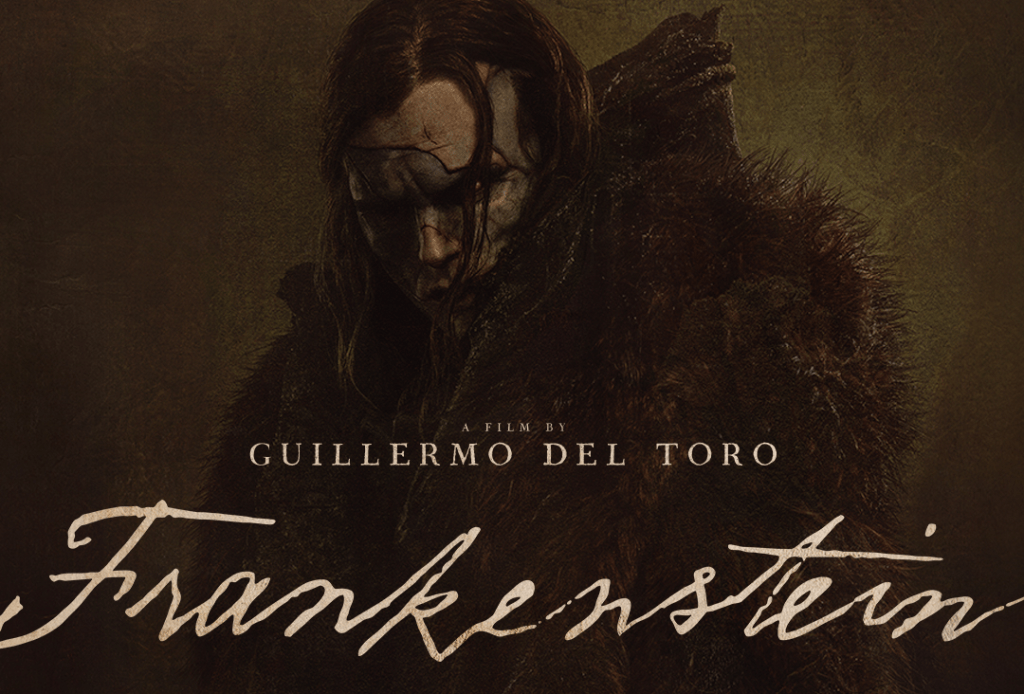
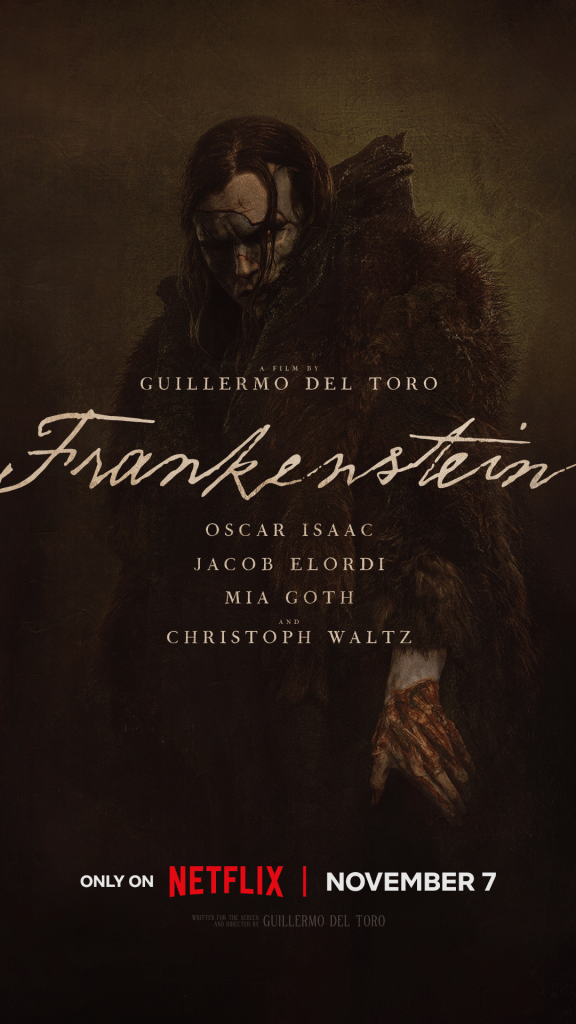
Frankenstein, a film directed by Guillermo del Toro and starring Oscar Isaac, Jacob Elordi, Mia Goth, and Christoph Waltz, is set to arrive on Netflix on November 7.
Oscar®-winning director Guillermo del Toro adapts Mary Shelley’s classic tale of Victor Frankenstein, a brilliant but egotistical scientist who brings a creature to life in a monstrous experiment that ultimately leads to the undoing of both the creator and his tragic creation.
Read everything you need to know about Frankenstein on TUDUM;
For additional information about the production, kindly visit this link
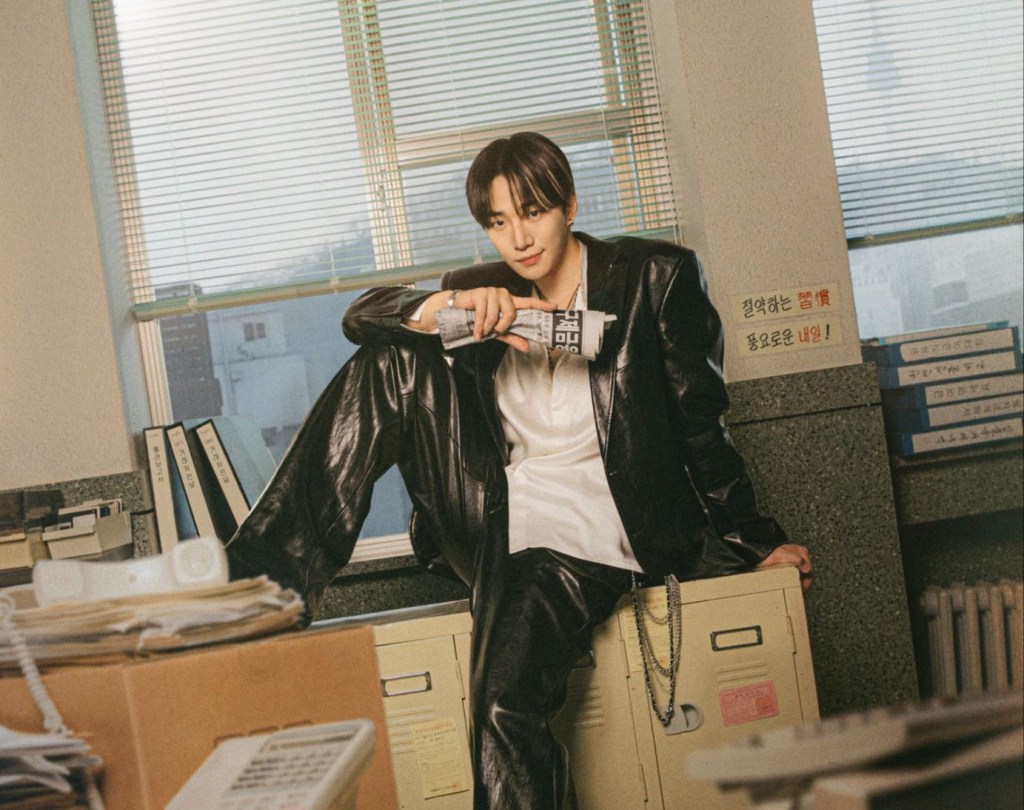
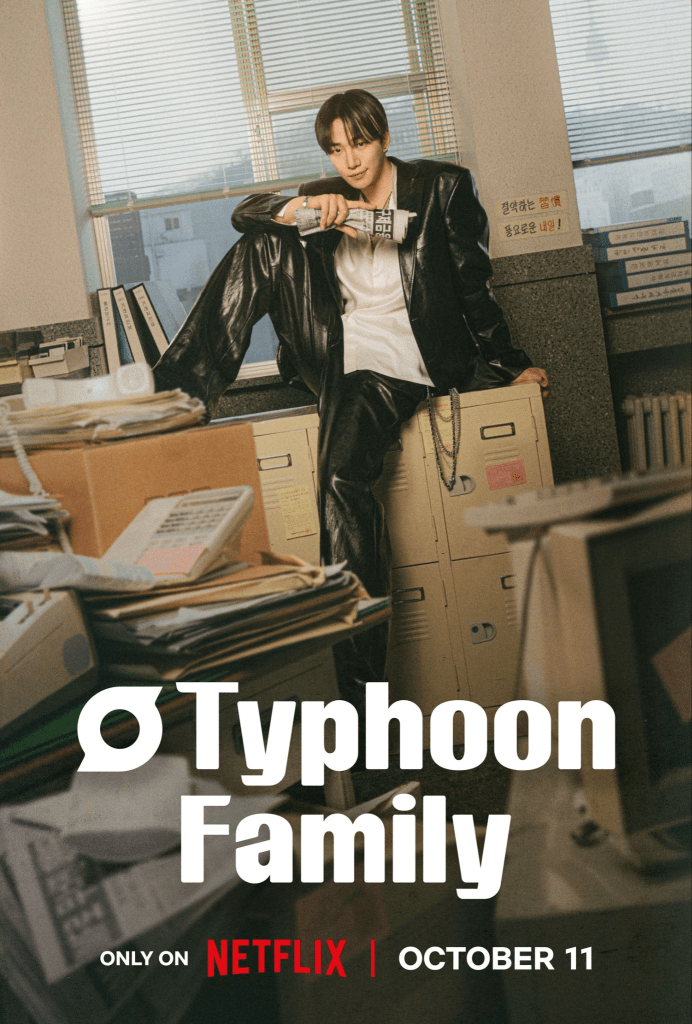
Netflix drops the trailer for its upcoming K-drama Typhoon Family starring Lee Jun-ho (of 2PM and King The Land).
Set during the 1997 Asian financial crisis, a carefree son inherits his father’s struggling business, transforming from a wild youth to a rookie boss as he navigates the complexities of adulthood.
Typhoon Family is coming on OCTOBER 11, ONLY ON NETFLIX
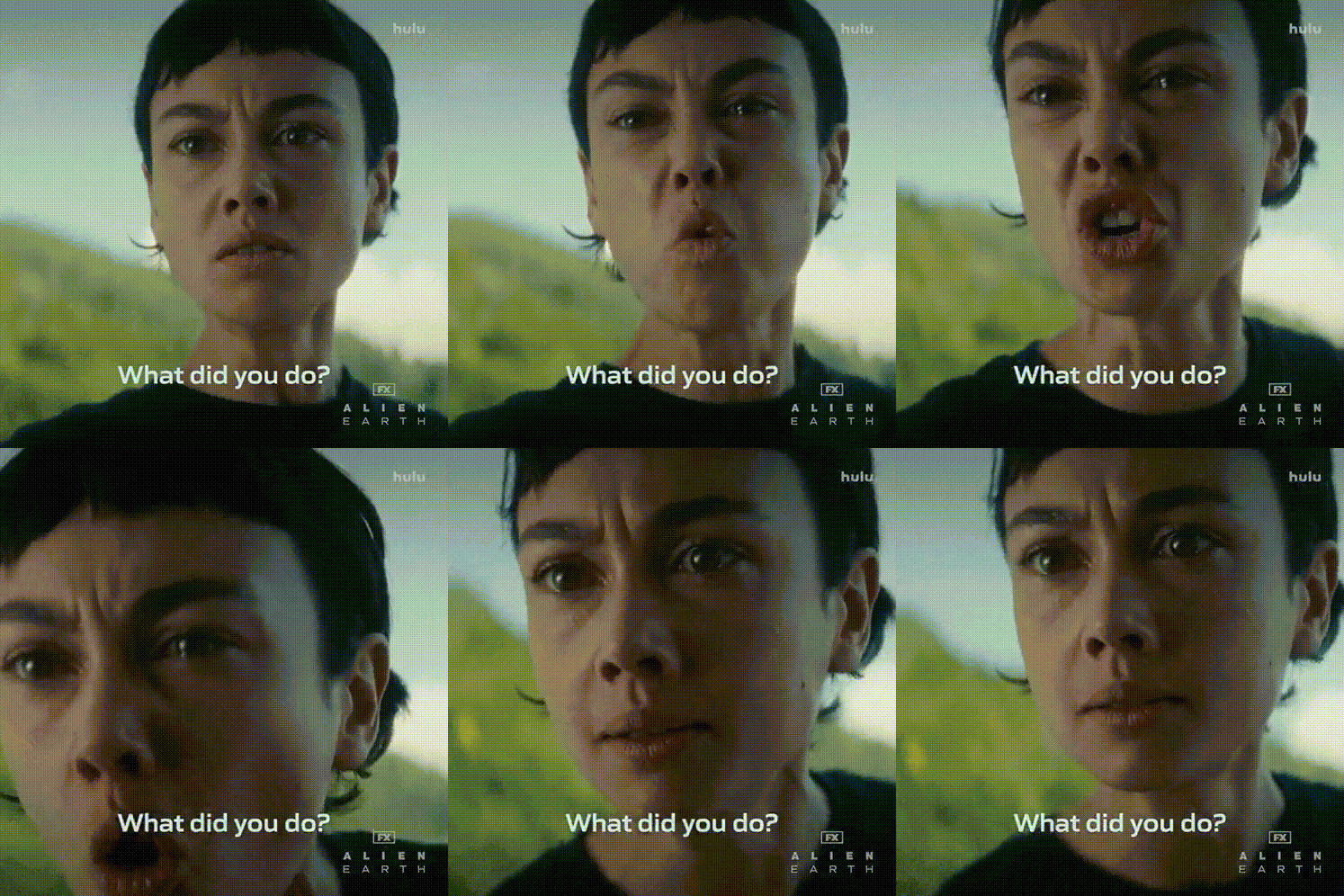
Joe does the unthinkable (or at least a surprise twist to his character) in the penultimate episode of Season 1 of Alien Earth. Wendy obviously didn’t like what her “brother” did.
How did you feel about the episode? I know this has made me pretty excited for the finale.
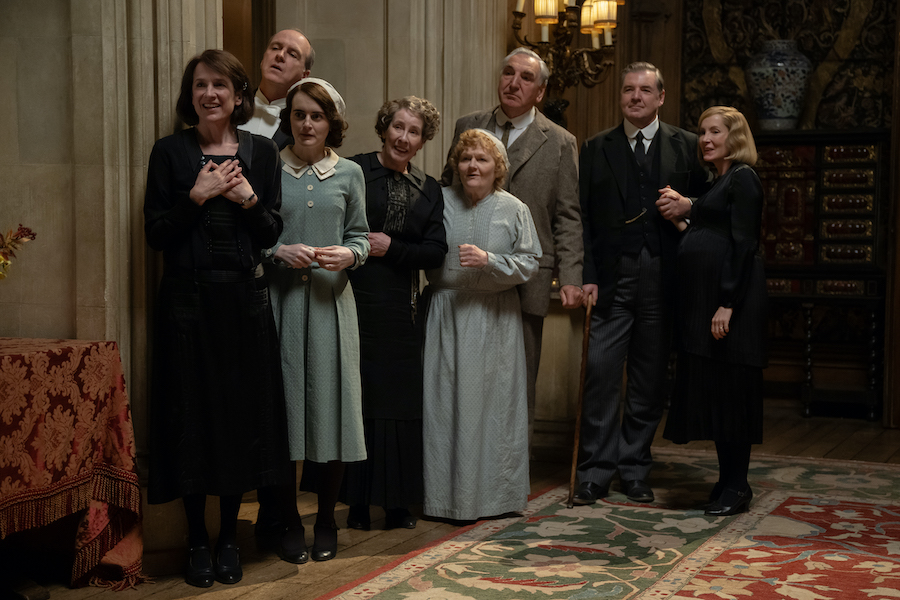
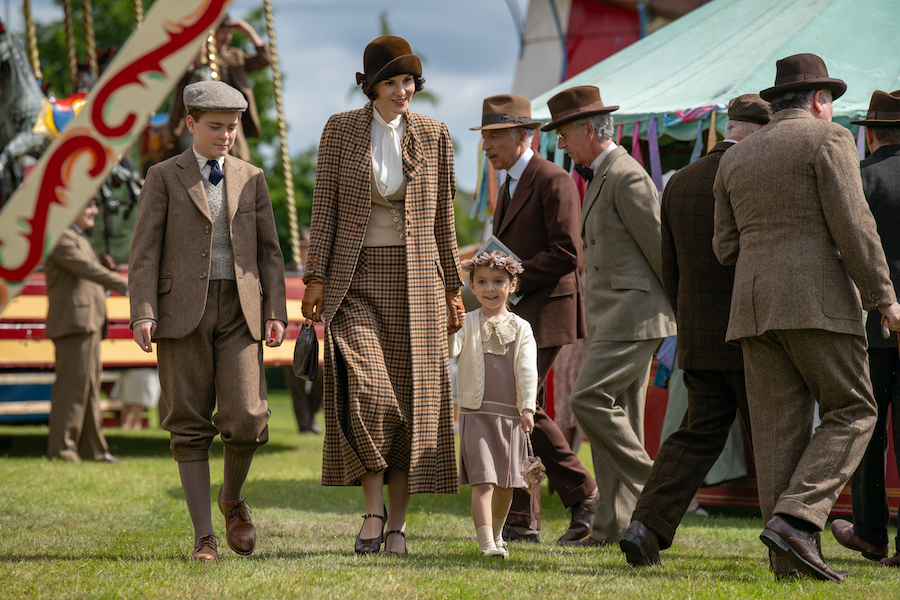
It’s the definitive curtain call for the long-running, beloved British television series about the aristocratic Crawleys and the servants who live with them at Downton Abbey.
Strictly for the fans, Downton Abbey: The Grand Finale is a fitting send-off to a beloved series and a lovely cast who have endeared audiences for many years —tip of the hat to all those involved, especially to the series creator, Julian Fellowes.
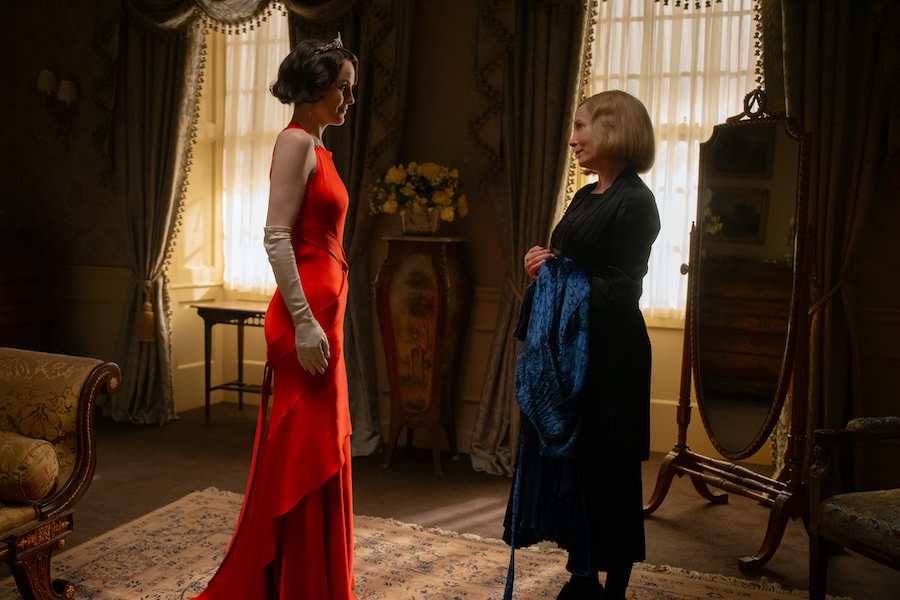
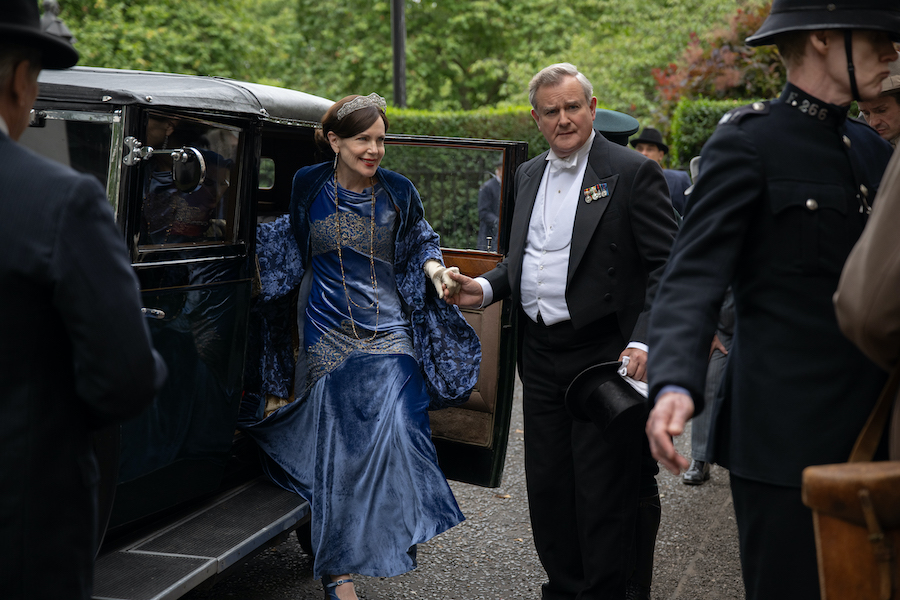
It is 1930, and the Crawleys are in London for several royal events. The day after attending a grand stage play at the Prince’s Theater, the. Crawleys attend a ball in London prepared by Lady Petersfield (Joely Richardson) for Princess Arthur (Lisa Dillon). But news of the divorce between Lady Mary (Michelle Dockery) and racing enthusiast Harold Talbot is too scandalous for the aristocrats in the room. Lady Mary is escorted out of the ballroom before the princess can arrive. The scandal reaches Downton in Yorkshire, where Daisy (Sophie McShera) prepares to take the mantle of head cook after Mrs. Patmore (Leslie Nicol) retires. Carson (Jim Carter) is restless, having retired from serving the household as head butler, the responsibility now in the hands of Andy (Michael Fox.)
Still in London, Mary meets up with her American uncle Harold (Paul Giamatti), who has business to discuss with his sister Cora (Lady Grantham, played by Elizabeth McGovern). With them is Harold’s business partner Gus Sambrook (Alessandro Nivola), who immediately takes an interest in Mary. The two engage in obvious flirting that leads to complicated situations, despite the protective suggestions of Mary’s lady-in-waiting, Anna (Joanne Froggatt). To say that Lady Mary is a magnet for controversy is an understatement.
Back at Downton, Harold admits that the estate that Cora has entrusted to him has been lost as the crash in the US signalled the Great Depression, and he owes Sambrook for bankrolling him so far. Mary suggests that the former home of the dowager countess be sold as it is no longer in use, enraging Robert (Lord Grantham, played by Hugh Bonneville). This topic raises the question again whether Mary can truly take care of Downton, or maybe Robert is just reluctant to let go of his stewardship of the place.
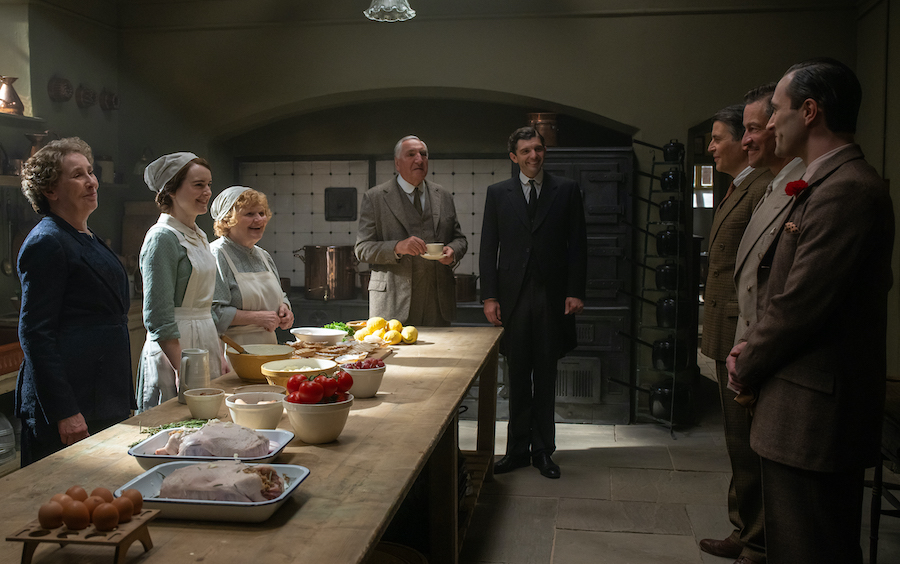
Meanwhile, the downstairs people unite to protect Mary’s honor among the villagers, including Lasy Merton (Penelope Wilton), who secured the services of Daisy and Carson for the village fair committee, despite the protests of the conservative chairman, Sir Hector Moreland (Simon Russel Beale). To restore the neighbor’s respect for Mary, Edith (Lady Hexham, played by Laura Carmichael) arranges for a formal dinner to be attended by stage star Guy Dexter (Dominic West) and the playwright Noel Coward (Arty Froushan). Expectedly, the neighbors reinvited themselves to the dinner. Former Downton footman Thomas (Robert James-Collier) is still accompanying Mr. Dexter at his tour.
With Mary’s place in Downton restored, Robert and Cora agree to move to a flat in London after selling the Grantham home. Needless to say, there’s nothing that the household couldn’t accomplish if they work together. All’s well that ends well.
The Grand Finale is practically a reunion for (almost) all the series regulars and serves as the definitive end to the drama about British aristocrats and their staff that began more than a decade ago. The film is set two years after the events of the previous film (A New Era), which ended with Tom (Allen Leech) marrying Lucy Smith, after the Dowager Countess Violet Crawley (Maggie Smith, RIP) passed while the family was in France.
To be fair, the film is all talkie. It is perfectly all right as a television special, as the events are hardly cinematic in scale, except for the horse race at the film’s climax. The characters are in constant conversation about the events, which would probably have doubled the two hours of the film had it taken the show-don’t-tell approach in storytelling. There’s hardly any room for establishing shots; the film just cuts to conversation after conversation in another room.
But of course, the genius here is in who is making the conversation – the series is about these characters, their journeys, and the lives that they have touched on- and off-screen, in a place that has survived the test of time and yet time moves ever onward. One can say that Downton is less about the posh trappings of aristocratic life (although viewers get a lot of that too,) but more about how these characters adjust to the changes sweeping Britain at the time – from WWI to the Spanish Flu pandemic to the rise of the working class and ultimately the beginning of the end of the aristocracy. The second film released in 2022, A New Era, literally makes Downton a movie set in the age of Hollywood.
In a way, the events of the final film create a recap of sorts of everything that transpired in the many years of the show.
There’s an upheaval with worldwide repercussions – here, it is the Great Depression. In Season 1, it was the First World War, and in Season 2, it was the Spanish Flu. Mary is constantly in a scandal about her marital status (all seasons), including a funny reference to indiscretions with handsome Turks. It’s interesting from a Filipino perspective how the film shows the effects of divorce on the family and in British society at that time when today in 2025 the Philippines is the lone nation on earth (with the exception of The Vatican) where divorce is still illegal. I mean, we don’t have aristocrats here but we sometimes act as if we do.
Continuing with series similarities with the Grand Finale, there’s another threat to the family fortune (in Season 3, it was Robert’s failed investments in North America that threatened to wipe out their finances). Robert is constantly worrying about the management of the estate (since Season 1), in this instance, in Mary’s strong, steady hands.
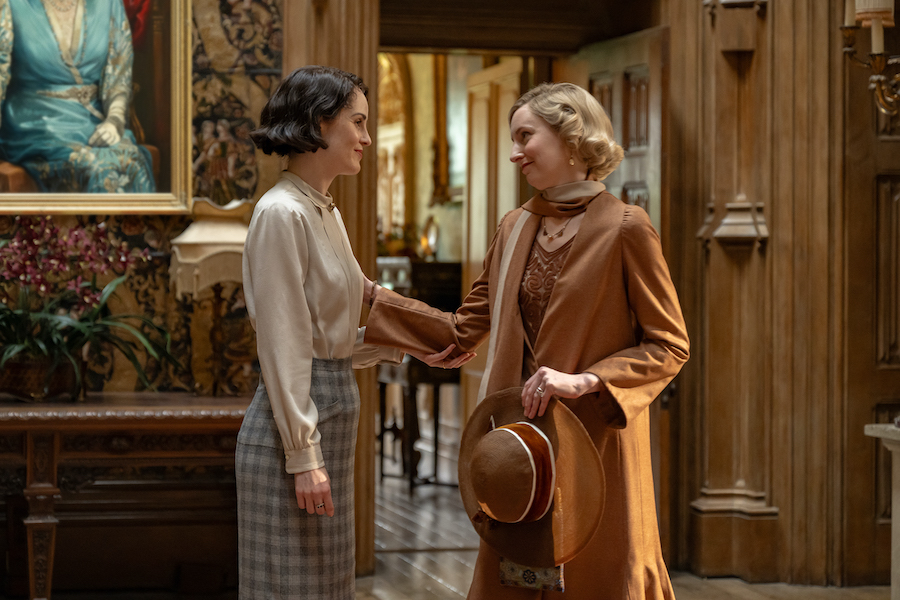
There are a few refreshing takes, thankfully. Mary’s and Edith’s sisterly bond has finally healed the years of bickering and jealousy. Edith even goes to the defense of Mary when she confronts the duplicitous Sambrook at the racetrack. Mrs. Patmore openly acknowledges Daisy’s turn to head the kitchen (after years of verbally abusing her), but more movingly, Patmore recognizes Daisy as the daughter she never had. That scene was one of the emotional highlights of the finale for me. “Our lives are written in chapters,” Mrs Patmore tells Daisy. Indeed, Mrs Patmore.
On a personal note, it was amusing to see recreations (reproductions?) of places in London that I happened to visit last year, more so places that seemed to have barely changed – at least on the surface – since 1930. Oh, except I never shopped inside Fortnum & Mason, only passed by the branch at The Royal Exchange.
In the end, it is not so much the nitty-gritty of events that make The Grand Finale significant as a film, but the interactions of these characters, how some have left the manor and then returned, the relationships, the good decisions, their bad decisions, their love of the family, each other and the manor – how all these elements have come full circle at the expert writing of series creator Julian Fellowes. That is how The Grand Finale fits as the poignant farewell to this household that has, for millions of fans around the world, become part of the family for many years.
In a way, it feels like a bittersweet parting with someone dear, but they must go. It’s an age that is meant to pass. One can only extend gratitude for the time spent together.
Downton Abbey: The Grand Finale is in Philippine cinemas September 10 from Universal Pictures Philippines and exclusively screened in Ayala Malls Cinemas.
Images courtesy of Universal Pictures.
The filming location, Highclere Castle, in reality served as a convalescent home during World War I
Darren Aronofsky banks on brooding Butlerian beefcake as he ventures into crime comedy territory in Caught Stealing – a dark action comedy that’s not quite in the same vein as his usual psychological character studies. Maybe this is Aronofsky’s audition for more commercially appealing box office projects. It’s pretty enjoyable. overall.
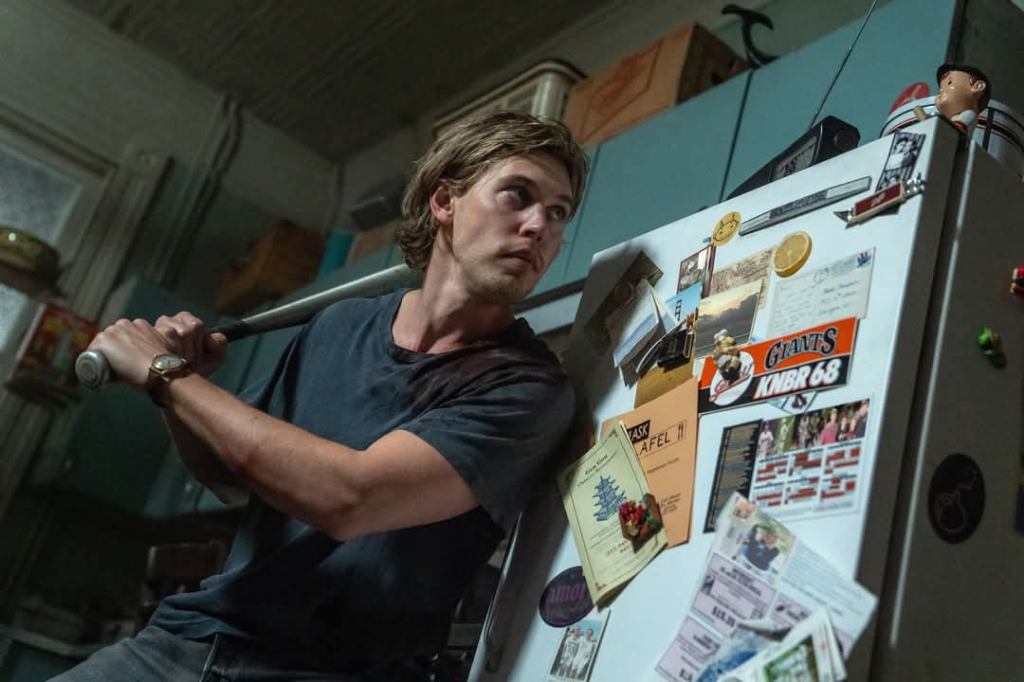
Caught Stealing is a comedic crime thriller based on the 2004 novel by Charlie Huston and written for the screen by Huston himself. Former Elvis actor Austin Butler plays Hank Thompson, a could-have-been MLB player with issues who gets thrust into the underbelly of 1998 New York all in a few days. SPOILERS AHEAD.
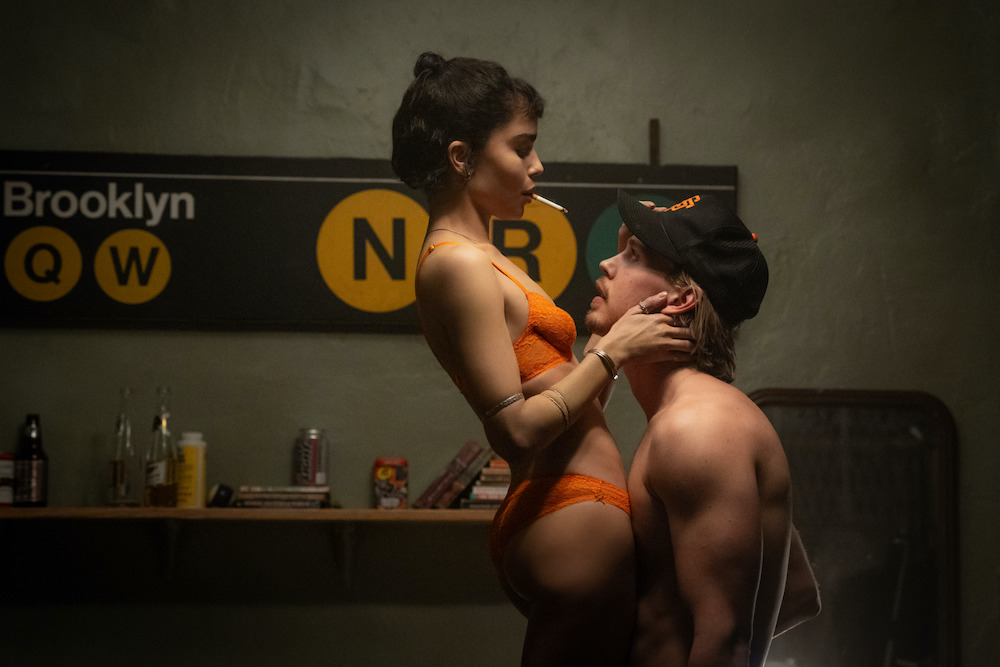
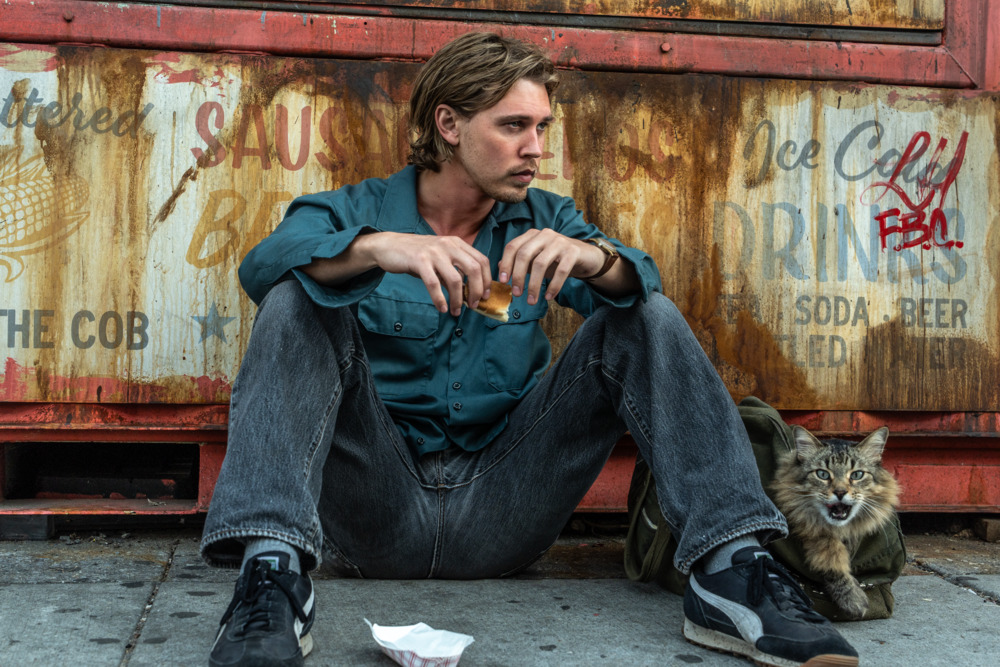
It is 1998 New York, and songs from Garbage and Smash Mouth can be heard in the background as Hank Thompson (Butler) returns to his apartment with his girl, Yvonne (Zoë Kravitz), after a long night at work as a bartender. He sees his British friend Russ (Matt Smith), mohawk and all, leaving things and his cat at his door. Russ says he needs to go to London for a few days. Remember the original Men In Black? It came out in 1997, about a year before the events in this movie. MIB should have been fresh in the minds of the public. High probability that Hank saw MIB. Anyway, my point being, the cat should have been a clue that his life was about to turn for better or worse overnight.
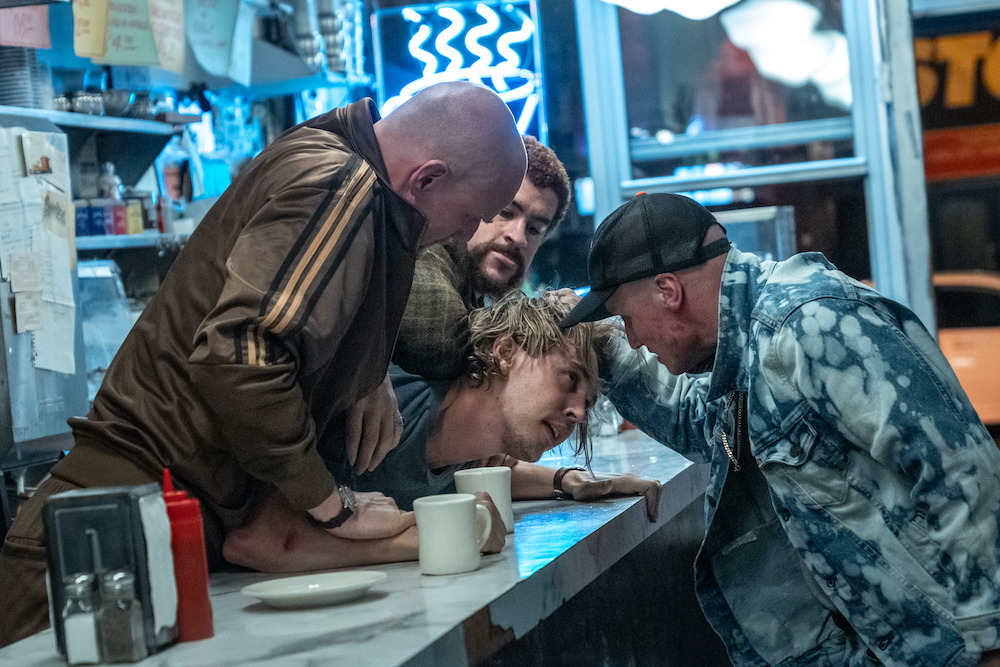
Hidden among Russ’s things is a mysterious key that unlocks something of immense value that a duo of Russians (Yuri Kolokolnikov and Nikita Kukushkin), Colombiano (Bad Bunny), the police detective Roman (Regina King), and Jews (Liev Schreiber and Vincent D’Onofripo) are all looking for. Hank gets wasted drunk from all the stress, and the next day, he is woken by henchmen in his apartment, with a bad hangover and zero memory of where the important key went. In between passing out and being half-conscious, Hank gets nightmares of a fatal car accident that was the reason that he never made it to the big baseball league.
Part of the fun in watching Aronofsky’s recreation of late 90s New York is the attention to detail that makes Hank’s neighborhood look and feel authentic. We’re not just talking graffiti on the street walls, ’90s clothing and cars; there’s Matthew Libatique’s warm photography of choice locations that render everything legitimately lived-in from that decade. Butler even resembles the late Kurt Cobain in one scene. It’s not about getting nostalgic, but getting immersed properly.
Butler looms large over the entire film, his presence just a tad less than overpowering every scene, as if the actor was still portraying his roles from his bigger films. I’m not saying that he’s over-acting (he is not), the film jist feels a lot smaller if a talented unknown were in Hank’s shoes instead of Butler.
Hank is. a troubled soul with a past that has demonized him throughout his life, or more accurately, the life that he never had because of a fatal accident during his youth. Butler fits the character believably well, displaying both physique and depth that a physically fit but mentally broken Hank requires. Granted, Hank may not be a career-defining moment for an actor from the audience’s perspective, but getting directed by Aronofsky surely would be career-defining for any actor.
SPOILERS. That said, Hank is the angel of death in the movie – a harbinger of gore and death, the Midas of murder. Almost everything he comes into contact with persihes. There’s such a pall of darkness and sadness over Hank that it sometimes eats up the comedy in the film. I’m not saying that it should be otherwise. I wasn’t looking for any redemption arc in particular, but it is an Aronofsky movie if the character constantly wallows in the darkness (Mother! The Black Swan and even The Whale come to mind). Hank isn’t necessarily the movie everydayman that actual everydayman ahould be identifying with. Who goes around and spreads death around him all the time? What I mean is that the viewing can get heavy while watching Hank’s character struggle, despite the occasional comical gags. Dark comedy, yes indeed. I haven’t read the source material, so I can’t comment on Aronofsky’s take on the adaptation.
Thankfully, Caught Stealing is just fun enough for a bloody wild misadventure, despite leaving a mildly dour aftertaste. Thank goodness it has all Austin Butler super beefcake power.
This film fondly reminded me of my days as an indie filmmaker: conscious of the ever-swelling budget, keen on character dynamics (because very often, you only have a few actors in the entire movie), and expert in finding unique set locations that require little dressing up. Almost back to basics, no-nonsense storytelling. It’s admirable that Aronofsky has maintained that quality, and it seems he will be keeping that virtue even with crowd-pleasing titles such as this.
Caught Stealing is out in Philippine cinemas September 10 2025 from Columbia Pictures.
Students and teachers can watch the much-awaited historical biopic “Quezon” at a special price when the film begins its Philippine theatrical run on October 15.
TBA Studios has officially announced that “Quezon” movie tickets will be available to students and teachers for only Php 250. To avail of the special rate, students and teachers simply need to present a valid school ID at ticket counters in participating cinemas nationwide.
According to TBA President and COO Daphne O. Chiu-Soon, the special ticket price aims to encourage students and educators to see “Quezon” specifically on the big screen.
“The best way to watch ‘Quezon’ is on the big screen. We are encouraging Filipinos to watch and experience ‘Quezon’ in the cinema, where it is meant to be seen,” Chiu-Soon said.
She added, “TBA Studios designed ‘Quezon’ to be a true cinematic experience. This is evident from the film’s star-studded ensemble cast—including Jericho Rosales playing the role of Manuel L. Quezon and our ‘import’ Iain Glen of the hit fantasy television series “Game of Thrones” playing Leonard Wood—to its entirely world-class technical and artistic execution.”
Chiu-Soon, who is also credited as one of the film’s producers, shared that the studio is open to making “Quezon” available on streaming platforms, though not in the immediate future.
Directed by Jerrold Tarog, ‘Quezon’ is the much-awaited conclusion to TBA Studios’ cinematic “Bayaniverse” trilogy, a series of films based on Philippine history. The “Bayaniverse” includes 2015’s “Heneral Luna,” the Philippines’ highest-grossing historical movie of all time, and 2018’s critically acclaimed “Goyo: Ang Batang Heneral.”
The film will focus on the titular Manuel L. Quezon during the American occupation. The full synopsis goes: “When his fight for Philippine independence from the United States is put to the test, Manuel L. Quezon finds himself playing the brutal game of politics to outmaneuver his rivals—including Leonard Wood, Sergio Osmeña, and Joven Hernando. In his relentless quest for power, he eventually faces off with Emilio Aguinaldo in the 1935 Philippine presidential elections, using charm and favoritism as both weapons and currency, in a campaign that ultimately changes the face of Philippine politics and history.”
Joining Rosales and Glen as part of the cast of are Benjamin Alves as Young Manuel L. Quezon and Mon Confiado as Emilio Aguinaldo, reprising their roles from “Heneral Luna” and “Goyo: Ang Batang Heneral.” Arron Villaflor also returns to the “Bayaniverse” as Joven Hernando, with Cris Villanueva playing the role of the older Joven Hernando. The ensemble cast also includes Romnick Sarmenta, JC Santos, and Karylle. Completing the cast are Jake Macapagal, Bodjie Pascua, Angeli Bayani, Jojit Lorenzo, Joross Gamboa, Therese Malvar, Ana Abad Santos, Ketchup Eusebio, and Nico Locco.
Chiu-Soon emphasized that while the film is the conclusion to the film studios’ acclaimed “Bayaniverse” trilogy, “Quezon” is a stand-alone film.
“Quezon” opens exclusively in theaters in the Philippines on October 15. Following its Philippine theatrical premiere, “Quezon” will be released internationally at a later date.
For complete guidelines on the special ticket price for students and teachers, contact the cinema of your choice.
Netflix has lifted the curtain on its latest Japanese epic, Last Samurai Standing, releasing its teaser trailer and announcing additional cast members ahead of the series’ global premiere on November 13. This deadly battle royale is already drawing international buzz, including an invitation to the 30th Busan International Film Festival, with the potential to be hailed as a “game-changer for the Japanese serial drama industry.”
The newly released teaser offers a pulse-pounding preview of the series’ atmosphere and the personalities of its many combatants. The production team’s commitment to authenticity is evident in the meticulous attention to costumes, weaponry, and the physical training of the cast, ensuring each character leaves a memorable impression even in the midst of rapid-fire action.
Set in the late 19th century during the Meiji period, Last Samurai Standing thrusts viewers into a relentless life-and-death game. At nightfall, 292 warriors — including lead character Shujiro Saga (Junichi Okada) — gather at Kyoto’s Tenryuji Temple, each lured by the promise of a massive cash prize. Each donning a single wooden tag, participants must steal the tags of their rivals and race to Tokyo to claim victory. As the signal sounds, the temple erupts into chaos, launching a brutal fight for survival where only one can stand victorious.
The action is epic, with the large-scale melee at Tenryuji Temple filmed over multiple days and involving more than 1,000 cast and crew members. Producer and star Junichi Okada, together with director Michihito Fujii, pushed the boundaries of visual storytelling, blending modern CG advancements with practical effects to deliver some of the most realistic and visceral action scenes ever seen in Japanese television.
The series boasts an impressive ensemble, with Junichi Okada not only leading the cast but also serving as producer and action planner. He is joined by Yumia Fujisaka, Kaya Kiyohara, Masahiro Higashide, Shota Sometani, Taichi Saotome, Yuya Endo, Yasushi Fuchikami, Kairi Jo, Takayuki Yamada, Wataru Ichinose, Riho Yoshioka, Kazunari Ninomiya, Hiroshi Tamaki, and Hideaki Ito. Today’s announcement reveals even more star power: Gaku Hamada as Superintendent General Toshiyoshi Kawaji; Taiiku Okazaki as Jinroku Keage, a successor of the Kyohachi-ryu school of swordsmanship; Arata Iura as Home Minister Toshimichi Okubo; Tetsushi Tanaka as Bureau of Communications chief Hisoka Maejima; and Ayumu Nakajima as Okubo’s secretary Shinpei Nagase. These new additions promise to further enrich the series’ expansive world.
As the teaser art hints at the harsh road ahead for Shujiro and Futaba, the series promises not just spectacle, but a meditation on the meaning of survival in uncertain times.
Last Samurai Standing is a tribute to the indomitable spirit of warriors who lived through turbulent eras. Prepare to witness a battle royale like no other when the series streams worldwide on November 13, only on Netflix.
















 acid reflects